A safety manager at a logistics company with sites in Ohio and California asked us a simple question: can she run one recordkeeping process for both? The honest answer took longer than she wanted. Ohio falls under federal OSHA. California runs its own OSHA-approved state plan, Cal/OSHA, and anyone filling in a Cal/OSHA form 300 needs to know that "state plan" doesn't mean "different rules from scratch" — it means a state program that must match or exceed the federal baseline, with its own forms and deadlines layered on top. This piece explains that structure honestly, including where our own knowledge — and Job13's current scope — stops.
What is an OSHA state plan, and does California really run its own?
Federal OSHA doesn't cover every US workplace directly. Under the Occupational Safety and Health Act, a state can ask the Department of Labor for permission to run its own occupational safety and health programme instead of falling under federal OSHA's direct jurisdiction. If approved, that programme is called a state plan. Roughly half of US states, plus a few territories, operate one; the rest sit under federal OSHA directly, following 29 CFR Part 1904 as written.
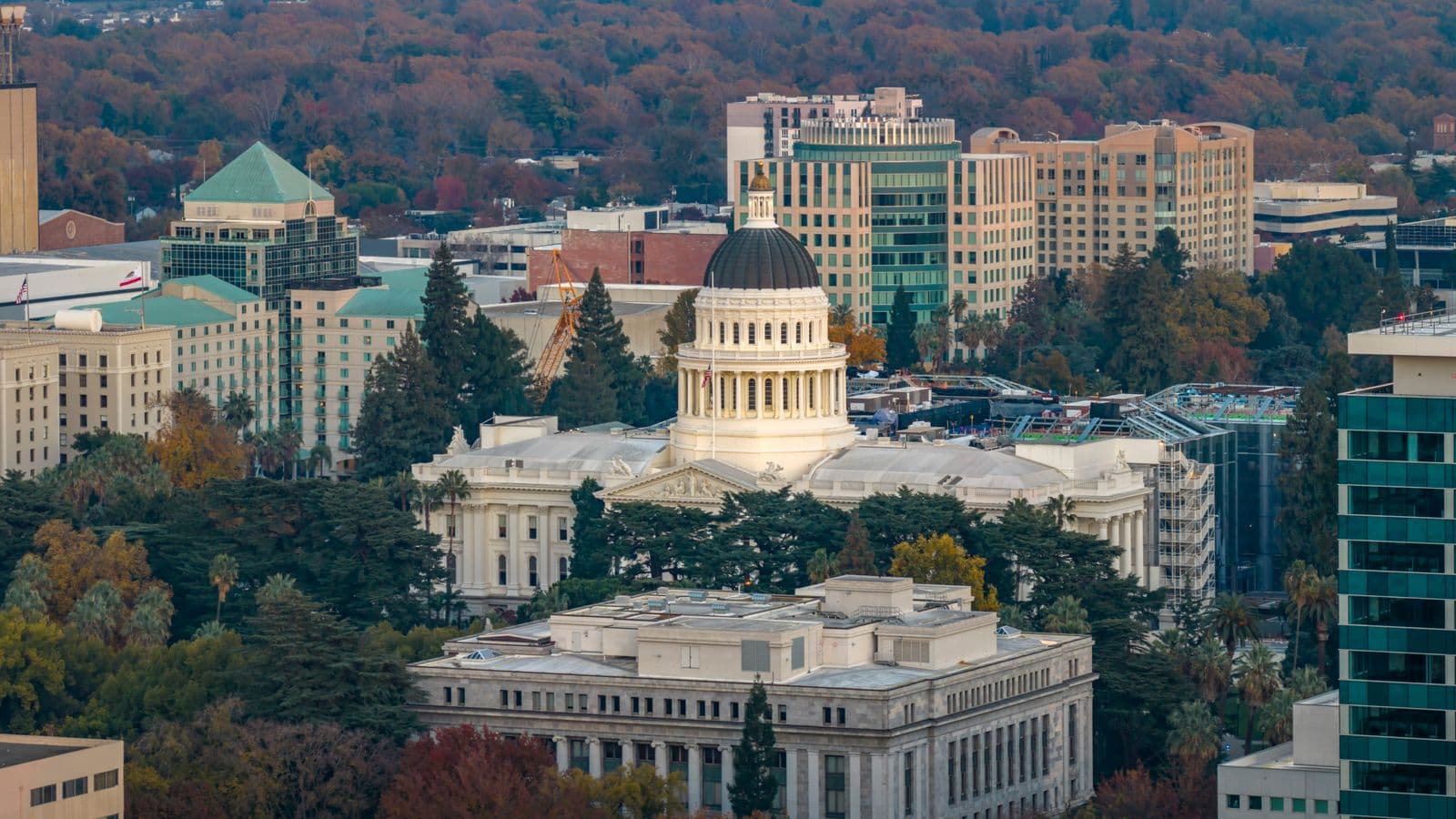
California is one of the state-plan states. Cal/OSHA is administered by California's Department of Industrial Relations, and it covers most private-sector employers in the state, plus state and local government employers that federal OSHA doesn't reach at all. That second point is worth sitting with: a state plan can actually cover more ground than federal OSHA, not less.
The law that lets states run their own plan sets one hard condition: the state programme must be "at least as effective as" the federal one. That phrase does real work. It means a state plan can match federal OSHA's requirements exactly, or it can go further and impose something stricter or additional. It can never fall short of the federal floor. So when an employer asks "is Cal/OSHA weaker or stronger than federal OSHA," the honest answer is: never weaker, and on any given point, possibly stronger.
How closely does Cal/OSHA recordkeeping follow federal 1904?
Closely, in structure. State plans are required to keep injury and illness recordkeeping "substantially identical" to the federal approach, which is why the core logic barely changes state to state. If an injury happened at work, is a new case, and meets a recording criterion — death, days away from work, restricted work or job transfer, medical treatment beyond first aid, loss of consciousness, or a handful of specific diagnoses — it's federally recordable under 1904.7. That three-part test is the backbone of the OSHA 300 Log, and it's the same backbone a state-plan state builds its own recordkeeping rule on top of.
Where things diverge is in the layer above that backbone: specific forms, specific submission mechanics, specific deadlines, and any additional state-specific requirement California chooses to add. This is exactly the point at which we stop being able to give you precise answers, and we'd rather say that plainly than guess. We are not going to name a specific Cal/OSHA form number, quote a specific California-only deadline, or assert a specific numeric threshold for the state programme in this post, because we can't verify those details hold true at the moment you're reading this. If you run California establishments, check Cal/OSHA's current requirements directly with California's Department of Industrial Relations before you assume the federal process transfers unchanged.
That gap between "structurally the same" and "identical in every form and date" is the whole point of this post. It's tempting to read "substantially identical" and stop there. Don't. Substantially identical still leaves room for a state to add a form, move a deadline, or extend coverage to employers federal OSHA doesn't reach.
Does the federal 300A posting and ITA submission process apply the same way in Cal/OSHA states?
The federal 300A summary posting and electronic ITA submission obligations exist under federal 1904 for establishments under federal jurisdiction. State-plan states are required to maintain equivalent recordkeeping and reporting obligations, but the exact mechanics — which portal, which posting window, whether a state-specific form supplements or replaces a federal one — are set at the state level and can differ from the federal process in the details. This is another place where we're not going to invent a specific answer for California. The honest instruction is the same one we gave above: verify current Cal/OSHA-specific requirements directly with Cal/OSHA rather than assuming the federal ITA process applies unchanged to a California establishment.
Is Cal/OSHA stricter than federal OSHA?
On individual points, it can be — that's what "at least as effective as" allows for. California has a documented history of adopting standards ahead of or beyond federal requirements in areas like heat illness prevention and workplace violence prevention, which shows the general pattern: a state plan is a floor-plus-something, never a floor-minus-something. Whether any particular recordkeeping provision is stricter in California specifically, at the level of detail an employer needs for compliance, is again something to confirm with Cal/OSHA directly rather than take from a general blog post.
Federal OSHA vs a state-plan state, side by side
| Dimension | Federal OSHA (direct jurisdiction) | State-plan state (Cal/OSHA as the example) |
|---|---|---|
| Which employers are covered | Most private-sector employers in states without an approved state plan | Most private-sector employers in California, plus state and local government employers federal OSHA doesn't cover |
| General recordkeeping approach | 29 CFR Part 1904 as written: work-relatedness, new case, recording criteria under 1904.7 | Required to be "substantially identical" to federal 1904 in its core recordability logic |
| Additional state-specific requirements | None beyond 1904 itself | May include state-specific forms, deadlines, or coverage extensions layered on the federal baseline |
| Minimum standard relative to federal | Is the baseline | Must be "at least as effective as" federal — equal or more protective, never less |
| Where to check current specifics | osha.gov/recordkeeping, Part 1904 in the eCFR | Cal/OSHA and California's Department of Industrial Relations directly — this post does not cite current Cal/OSHA form numbers or deadlines |
Table: the general shape of the federal-versus-state-plan relationship. Details specific to any one state, including California, should be confirmed with that state's own agency.
A worked example: one process, or two?
Back to the logistics company with sites in Ohio and California. Here's the honest breakdown we gave her.
The recordability logic transfers. When a warehouse worker in either state strains a back lifting a pallet, the question "is this a new case, is it work-related, does it meet a recording criterion" gets asked the same way in Columbus and in Fresno. That's the part of the job that's genuinely federal, and it's the part a tool like Job13's recordability check applies consistently across every establishment, regardless of state.
What doesn't automatically transfer is everything downstream of that determination for the California site: which state-specific form (if any) supplements the federal 300 Log, what the state's posting or submission mechanics look like, and any additional trigger for state reporting that federal 1904 doesn't have. Running one unified process for determining recordability is safe and, honestly, a good practice — it keeps the underlying judgement consistent across every site. Assuming that same unified process automatically satisfies California's paperwork requirements is not safe, and it's the mistake that catches multi-state employers off guard.
Her fix, in the end, was to split the workflow into two layers: one shared recordability engine feeding every site's 300 Log, and one California-specific compliance checklist, verified directly with Cal/OSHA, sitting on top of it for the state-specific forms and dates. That's the model we'd recommend to any multi-state employer with a California footprint.
Where teams get this wrong
- Assuming state-plan states use identical forms to federal OSHA. "Substantially identical" recordkeeping logic is not the same promise as identical paperwork. A state can layer its own form or process on top of the federal one.
- Not checking whether a specific state has stricter provisions. Because a state plan can only match or exceed the federal floor, silence in a general article like this one isn't evidence a state has no additional requirement — it's evidence you need to check with that state directly.
- Applying one state's rule nationwide for a multi-state employer. A recordkeeping habit built around California's specifics, applied unchanged to a site in a federal-OSHA state, can be just as wrong as the reverse. Each establishment sits under one jurisdiction's actual rule.
- Treating "state plan" as a synonym for "extra burden" or "different logic." The core 1904.7 recordability test is the same skeleton everywhere. The divergence is in forms, deadlines and additional coverage, not in how the injury itself gets judged recordable.
- Skipping verification because the federal answer was easy to find. Federal 1904 is public, stable and thoroughly documented. That makes it tempting to assume a state's rule is just as easy to look up and just as static. State-specific requirements change, and they deserve a direct check with the state agency, not an inference from a federal source.
One EHS manager we spoke with, running sites in three states including California, put it this way: "We got the recordability call right every time — that part was never the problem. What tripped us up was assuming the California paperwork worked the same as everywhere else. It didn't, and we only found out at an audit."
What this means for your recordkeeping process
If your only US establishments sit in states under direct federal OSHA jurisdiction, 29 CFR Part 1904 is the whole rulebook, and a federal-only determination engine covers you completely. If you have even one California establishment — or any establishment in another state-plan state — treat the federal determination as the first, necessary layer, then add a second, state-specific verification step before you finalise anything you submit or post in that state.
That's exactly the boundary Job13 draws around itself, and we'd rather state it plainly than let you assume otherwise: Job13's recordability check and its paid 300 Log, 300A summary and ITA export tools apply federal 29 CFR Part 1904 only. They do not currently implement Cal/OSHA-specific forms or any other state-plan-specific variation. That's not a shortcoming we're apologising for — it's the actual, current scope of the product, stated honestly so you can plan around it. For a California establishment, run the federal determination, then verify the California-specific layer directly with Cal/OSHA. Our exempt and partially exempt industries guide covers the federal industry carve-outs, which also apply as a starting point before any state-specific adjustment.
Start with a free check at /recordable, read the federal text yourself at /rule/1904, and see what full recordkeeping support looks like at /pricing — with the state-specific step still yours to confirm separately.
Frequently asked questions
What is a Cal/OSHA form 300, and is it the same as the federal OSHA 300 Log?
Cal/OSHA's recordkeeping obligations are built on the same federal recordability logic as the federal OSHA 300 Log — the 1904.7 test for work-relatedness, new case, and a recording criterion. California is required to keep its recordkeeping approach substantially identical to the federal one in that core sense. Whether "Cal/OSHA form 300" refers to an identical document, a state-specific variant, or additional state paperwork layered on top is a detail that changes over time and should be confirmed directly with Cal/OSHA rather than assumed from the federal form.
Does California really have its own OSHA, separate from federal OSHA?
Yes. California operates an OSHA-approved state plan, commonly called Cal/OSHA, administered by the state's Department of Industrial Relations. It functions instead of direct federal OSHA jurisdiction for most California employers, and it's required to be at least as protective as federal OSHA, meaning it can add requirements but can't fall short of the federal baseline.
How many US states run their own OSHA state plan instead of falling under federal OSHA?
Roughly half of US states, along with a few territories, operate their own OSHA-approved state plan; the remainder are covered directly by federal OSHA. We're stating that as a general, rounded description rather than a precise current count — the exact number and list of approved state plans can be confirmed at osha.gov/stateplans.
If a company has sites in both a federal-OSHA state and California, can it use one recordkeeping process everywhere?
The underlying recordability logic — the 1904.7 test applied to each case — can and should be applied consistently across every site, including California ones. What can't be assumed to transfer unchanged is the state-specific paperwork layer: forms, submission mechanics and deadlines specific to California need separate verification with Cal/OSHA. Treat it as one shared determination engine feeding site-specific compliance checklists, not one process end to end.
Does Job13 handle Cal/OSHA-specific recordkeeping requirements?
No, and we want that stated clearly rather than discovered later. Job13's recordability check and its 300 Log, 300A summary and ITA export tools cover federal 29 CFR Part 1904 only. State-plan-specific requirements, including any Cal/OSHA-specific forms or deadlines, are outside its current scope. Use Job13 for the federal determination, then verify state-specific requirements directly with the relevant state agency. This article, like the product, is not legal advice.