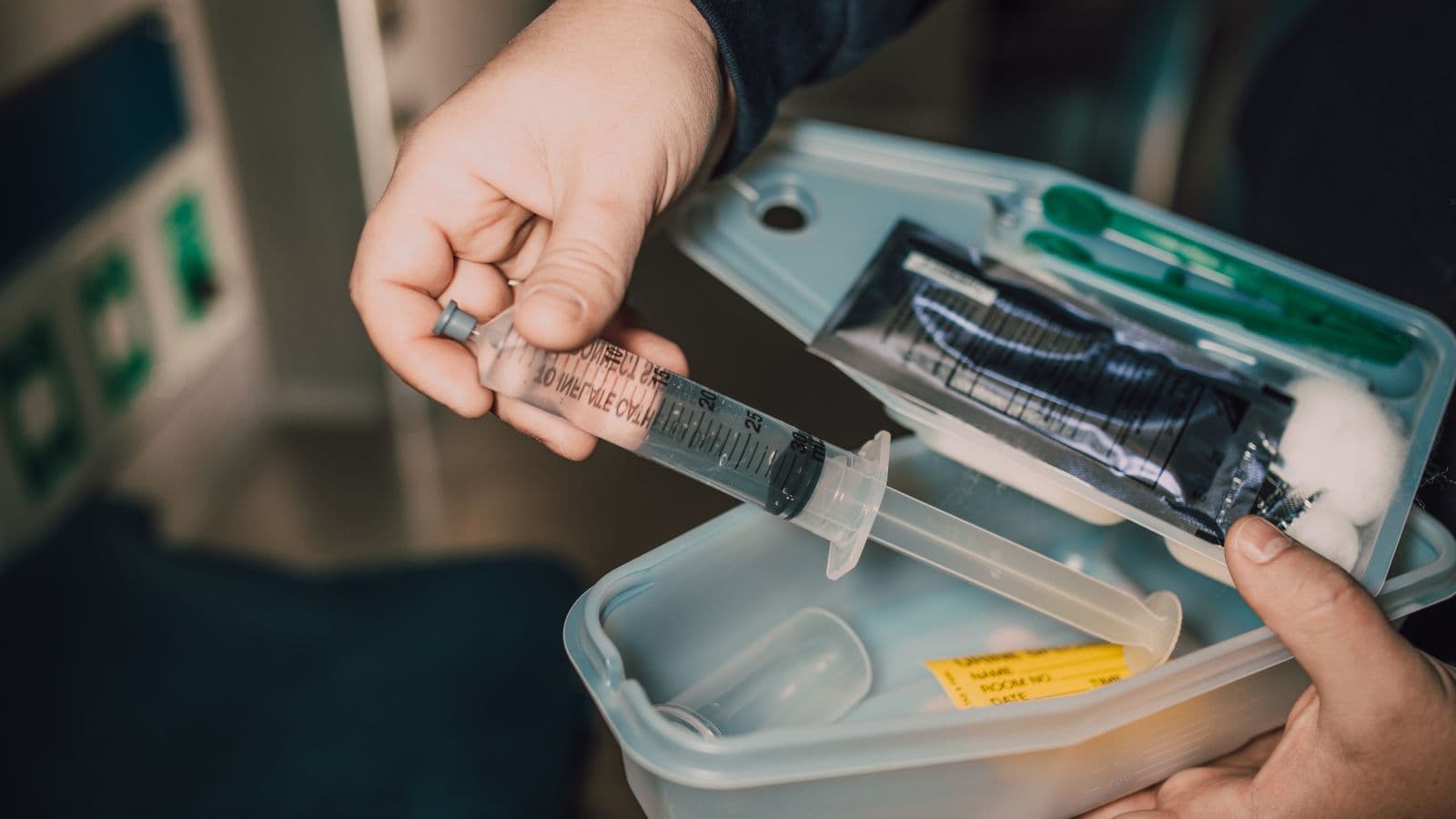
OSHA medical treatment means managing or caring for a patient to combat disease or disorder. For recordkeeping, the decisive phrase is beyond first aid. If a work-related new case receives treatment beyond OSHA’s closed first-aid list, it is recordable; the treatment does not have to involve an ambulance, a hospital stay or a day away from work. That small distinction is why a single prescription can matter more than an injury that looks dramatic on the shop floor.
Start with OSHA’s closed first-aid list
The rule at 29 CFR 1904.7 treats first aid as a specific list, not a general impression that care was minor. It includes cleaning or covering superficial wounds, non-prescription medication at non-prescription strength, tetanus immunisation, hot or cold therapy, non-rigid support, temporary immobilisation while transporting a victim, drilling a fingernail to relieve pressure, draining a blister, eye patches, removing splinters by simple means, finger guards, massage and drinking fluids for heat stress.
If the treatment does not fit that list, do not casually call it “basic care”. Check the exact item and document the dose, device or instruction. Our first-aid reference gives the complete fourteen-item list with the wording that is easy to lose in a condensed checklist.
| Treatment or outcome | Typical OSHA recordkeeping result | Why |
|---|---|---|
| Adhesive bandage and wound cleaning | First aid | Listed first-aid care |
| OTC pain relief at label strength | First aid | Listed when used at non-prescription strength |
| Prescription-strength medicine | Recordable trigger | Medical treatment beyond first aid |
| Sutures or staples | Recordable trigger | Not on the first-aid list |
| Butterfly closure strips | First aid | Wound covering, not suturing |
The rest of the recordability test still applies: the case must be work-related and new.
Prescription medication is the recurring trap
Medication is not sorted by whether it seems potent. OSHA distinguishes a non-prescription medicine used at non-prescription strength from a prescription medicine. A clinician may write a prescription for a dose that is available over the counter; that fact does not automatically decide the case. What matters is the medication and strength actually used.
Suppose a worker strains a shoulder while lifting a box. The clinic advises ibuprofen at the ordinary label dose, ice and a day of observation. That treatment alone sits in first aid. If the clinician directs a prescription-strength anti-inflammatory medication, the medical-treatment criterion is generally met. Record the name, dose and instruction—not simply “given pain medication”—so the decision can be reviewed later.
That is not permission to diagnose from a pill bottle. Ask the clinician or pharmacy record when the facts are unclear. A rushed “it was only tablets” explanation is exactly how a clean recordkeeping answer turns murky months later.
Devices, procedures and follow-up care
Rigid supports, physical therapy and suturing regularly change the outcome. A removable, non-rigid support such as an elastic bandage can be first aid; a device used to immobilise a body part is not. A referral for evaluation is not itself treatment, but the treatment actually provided can be. Observation, counselling and diagnostic procedures on their own do not count as medical treatment, yet a significant diagnosis can independently make a case recordable.
Consider a forklift driver with a swollen ankle. Urgent care takes an X-ray, finds no fracture, offers a reusable elastic wrap and sends the driver back with no work limits. The X-ray is diagnostic and the wrap can be first aid, so this route does not automatically create a recordable case. Change the facts to a walking boot that immobilises the ankle, or a clinician’s restriction from normal driving, and another 1904.7 criterion may apply. The case turns on facts, not on the clinic’s address.
A quick way to make the call properly
Work through four questions in sequence. First, did an event or exposure in the work environment cause, contribute to or significantly aggravate the condition? Next, is it a new case? Then match every treatment against the first-aid list. Finally, check the other triggers: days away, restriction, job transfer, loss of consciousness and significant diagnosis. The recordable criteria checklist has the full order.
The last question matters because first aid does not end the enquiry. A worker treated only with a cold pack may still be recordable if a clinician restricts normal duties for the next shift. Likewise, a prescription does not erase the need to establish work-relatedness. Clear documentation is the quiet hero here: instruction, dose, normal job tasks and return-to-work date.
Common errors that cost time later
Teams often count any treatment by a doctor as medical treatment. That is too broad. They also assume a nurse’s treatment can never count, or that an emergency department visit always counts. Both are the wrong lens. The rule asks what treatment and outcome occurred.
The other mistake is calling a case non-recordable because the worker “felt fine” after treatment. Recordkeeping follows the criteria, not bravado. A stitch is still a stitch; a restricted shift is still a restricted shift. Use a factual record, then run the rule. If an essential fact is missing, flag the case for review rather than treating uncertainty as a no.
Record the treatment, not the shorthand
The best contemporaneous note states what was provided and why: “two sutures placed to close laceration”, “ibuprofen 400 mg directed three times daily”, or “elastic wrap, no work restriction”. Avoid “seen by doctor”, “meds” or “cleared”. The original clinician instruction is preferable to a recollection passed through three managers. If an employee declines recommended care, document what was offered and what actually occurred; do not assume an unreceived treatment outcome. That detail makes an internal audit much less fraught and lets the recordkeeper revisit the answer honestly if a later restriction or diagnosis arrives.
Frequently asked questions
Is an emergency-room visit automatically OSHA recordable?
No. The location of treatment does not decide recordability. Look at what was done and whether another Part 1904 criterion applies. Evaluation, diagnostic testing and observation alone are not necessarily medical treatment beyond first aid.
Are stitches OSHA recordable?
Usually, yes. Sutures and staples are medical treatment beyond first aid, so a work-related new case that receives them meets a general recording criterion.
Is physical therapy first aid under OSHA?
No. Physical therapy and chiropractic treatment are medical treatment beyond first aid. Do not confuse them with massage, which is listed as first aid.
What if a clinician gives a work restriction but no treatment?
Restriction can independently make a work-related new case recordable. Check whether the employee was kept from one or more routine job functions or from working a full workday, as explained in our restricted-work guide.