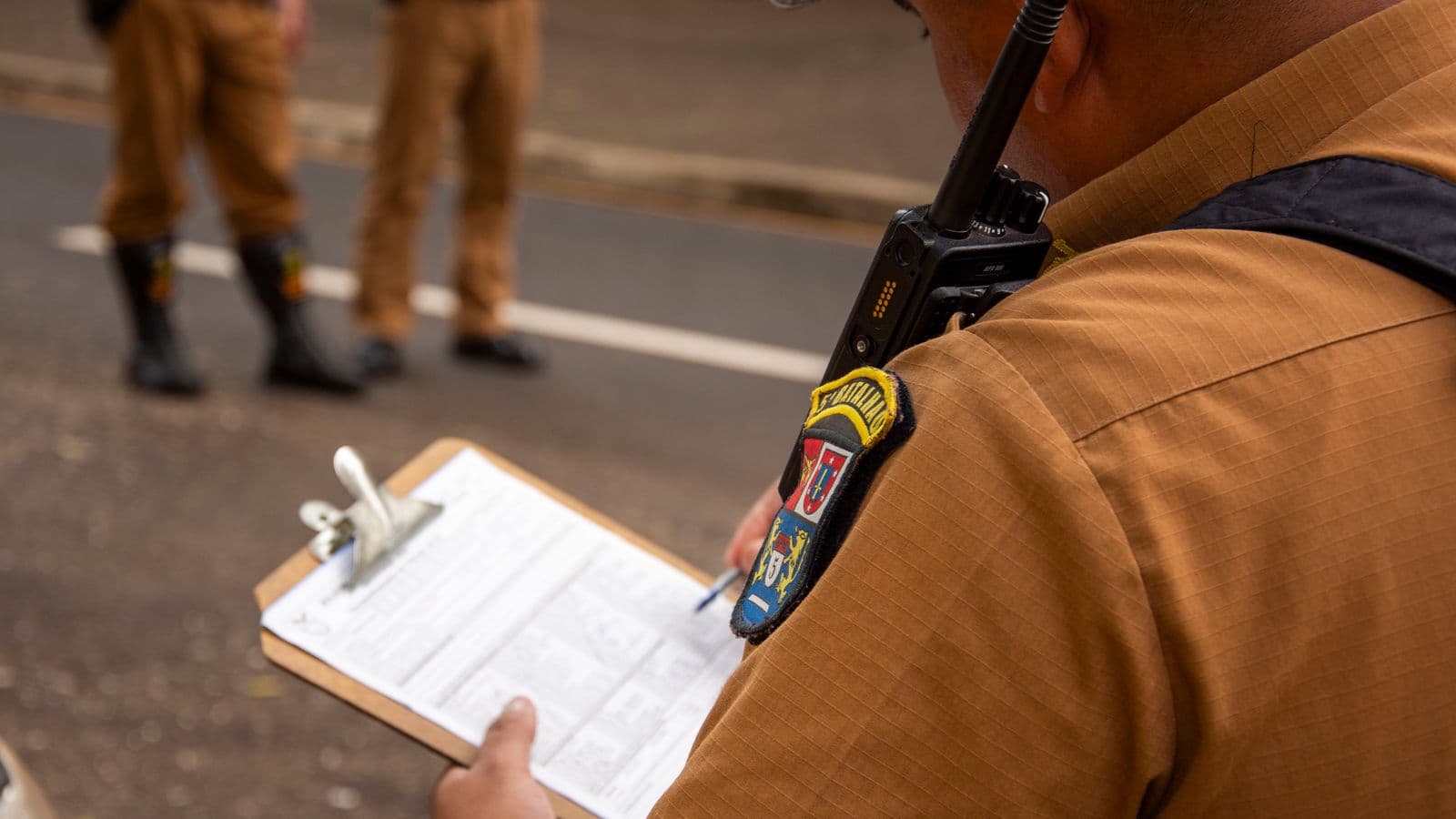
A machine operator loses two fingers on a punch press at 9 a.m. The plant manager calls corporate, corporate calls the safety consultant, and by lunchtime someone says "well, it's recordable, so we're covered." They are not covered. An amputation isn't just a line in the OSHA 300 Log — it's a phone call to OSHA that should already have been made. Recordable vs reportable OSHA rules sound like the same idea. They aren't, and mixing them up is one of the most common — and most citable — mistakes in workplace safety.
Recordable means the case goes in your own paperwork. Reportable means you pick up the phone. This piece draws the line between them, with the sections of 29 CFR Part 1904 that set each test, so the next time someone asks "do we need to call OSHA on this one," you already know the answer.
What does "recordable" actually mean?
Recordable is a self-administered test. Under 1904.7, you — the employer — decide whether a work-related injury or illness belongs on your own OSHA 300 Log. Nobody at OSHA reviews it in real time, nobody signs off, and no call goes out the day it happens. You apply the criteria yourself: the case has to be work-related (1904.5), it has to be a new case rather than a flare-up (1904.6), and it has to meet one of the 1904.7(b) triggers — death, days away from work, restricted work or job transfer, medical treatment beyond first aid, loss of consciousness, or a significant diagnosis like a fractured bone.
Meet any one of those and the case goes on the log. That's the entire transaction. You don't notify anyone, you don't start a clock, and you don't need OSHA's permission. The record sits in your own files — and later feeds your Form 300A summary and, for larger establishments, your ITA submission — until an inspector asks to see it. We've covered the full recordable test, criterion by criterion, in what makes an injury OSHA recordable, and the criteria checklist if you want the short version to keep on the wall.
What does "reportable" actually mean?
Reportable is a different animal entirely. Under 1904.39, certain severe outcomes trigger a mandatory, time-critical notification directly to OSHA — independent of whether you've made a recordability call yet. You don't wait to finish your paperwork. You report first, sort out the log entry after.
The triggers are narrow and severe:
- A work-related fatality must be reported within 8 hours of the employer learning of it.
- A work-related in-patient hospitalisation, amputation, or loss of an eye must be reported within 24 hours of the employer learning of it.
You report by phone to the nearest OSHA area office, through the 24-hour OSHA hotline, or online. There's no form to file first, no internal sign-off required — the clock starts the moment a responsible person at your company learns the injury happened and learns it meets one of these categories. Read the rule itself at 1904.39, fatality and hospitalisation reporting, or the full text of 29 CFR Part 1904 if you want the surrounding sections too.
Is every recordable injury also reportable?
No — and this is the single most common misunderstanding. The overlap runs one direction, not both.
Almost every reportable event is also recordable. A fatality, an in-patient hospitalisation, an amputation, or a lost eye will virtually always trigger a 1904.7(b) criterion — death, days away, or a significant diagnosis — so it lands on the 300 Log as well as going to OSHA. But the reverse isn't true. The vast majority of recordable cases never touch the reporting requirement at all. A sprained ankle that puts someone on light duty for three days is recordable. A laceration that needs stitches is recordable. A diagnosed hairline fracture that a doctor treats and sends the employee home from, no hospital stay involved, is recordable. None of those trigger a call to OSHA. They just go in the log, the same as hundreds of routine cases most employers handle every year without ever picking up the phone.
Picture it as two circles that mostly don't overlap. Recordable is the big circle — it holds every case that meets a 1904.7 criterion, which is most workplace injuries beyond minor first aid. Reportable is a small circle almost entirely inside it, holding only the outcomes severe enough to need OSHA told immediately. Nearly everything in the small circle is also in the big one. Almost nothing in the big circle is in the small one.
Recordable vs Reportable: side by side
| Recordable (1904.7) | Reportable (1904.39) | |
|---|---|---|
| What triggers it | Death, days away, restricted work/transfer, medical treatment beyond first aid, loss of consciousness, or a significant diagnosis | Fatality, in-patient hospitalisation, amputation, or loss of an eye |
| Deadline | Log within 7 calendar days of learning of the case | Fatality: 8 hours. Hospitalisation/amputation/eye loss: 24 hours |
| Who you tell | Nobody in real time — you log it yourself | OSHA directly, by phone, hotline, or online |
| Which form | OSHA Form 300 (and 300A at year-end) | No form — a phone call or online report to the area office |
A case can be recordable without ever being reportable, but it's rare for a reportable case to escape the log.
A worked example: the amputation vs the routine sprain
Here's how the two tests play out on the same factory floor, on the same day, for two different employees.
Case one. A press operator reaches into a die to clear a jam and loses the tip of a finger above the first joint. This is an amputation. It meets the 1904.39 trigger immediately — the employer has 24 hours from the moment they learn of it to report to OSHA, regardless of whether the paperwork for the 300 Log is finished. It's also recordable: an amputation is a textbook 1904.7(b)(7) significant injury, so it goes on the log too. Both duties apply, on two different clocks, and neither one waits for the other.
Case two. Two aisles over, a picker steps off a pallet jack awkwardly and sprains an ankle. The company doctor puts her on light duty — no lifting over ten pounds — for four days while it heals. That's a textbook restricted-work case under 1904.7(b)(4). It goes on the 300 Log. It is never reported to OSHA, not on day one and not ever, because a sprained ankle doesn't meet any 1904.39 trigger. No hospitalisation, no amputation, no fatality. It's recordable and nothing more.
Run both cases through Job13's recordability check and you'll see the same split: the amputation flags for both the log and the 24-hour report, the sprain flags for the log only. That's the point of separating the two tests — one determination doesn't answer the other question.
One EHS manager we spoke with put it this way: "The reporting call is the one you can't take back. Get the recordability call wrong and you fix it on the next log update. Miss the 24-hour window and there's no fixing that — the citation is for the delay itself, not for anything about the injury."
Where teams get this wrong
Assuming a reportable case must be more "seriously recordable" than an ordinary one. It isn't a tier system. A fatality is recorded the same way — one line on the log — as a sprained wrist. Reportability doesn't add extra recordkeeping steps to the log entry; it adds a completely separate notification duty running in parallel.
Missing the 24-hour clock because "the ambulance took him, but he wasn't admitted." The trigger is in-patient hospitalisation — formal admission for treatment, not an ER visit, observation, or overnight hold for tests. Teams sometimes report cases that don't require it, and just as often miss ones that do because nobody confirmed whether the hospital actually admitted the employee. Confirm admission status before you decide the clock doesn't apply.
Thinking every recordable case needs a call to OSHA. This is the mirror image of the mistake above, and it's the one that burns the most time. Most safety coordinators who are new to the role over-report out of caution, phoning the area office about a case that only ever needed a log entry. It wastes their time and the area office's.
Starting the clock from the wrong moment. The 8-hour and 24-hour windows run from when the employer learns of the case and learns it meets a reporting trigger — not from the moment the injury happened. If a report of an amputation reaches HR three days after the injury because nobody up the chain flagged it, the clock still only started when someone in a position to report actually found out. That's not a licence to sit on bad news — a documented reporting lag inside your own company is exactly the kind of thing that draws scrutiny.
Forgetting the motor vehicle carve-out. A work-related hospitalisation from a crash on a public road generally doesn't trigger the 24-hour reporting duty — OSHA carves out motor vehicle accidents on public roads from 1904.39 specifically. The case can still be recordable under 1904.7. It just isn't one you phone in.
OSHA's own enforcement data shows late or missed fatality and hospitalisation reports remain a recurring citation category year after year — not because the rule is obscure, but because the clock starts before most companies have finished confirming the facts. Building the habit of reporting first and investigating after is the only reliable fix.
Frequently asked questions
Does a reportable injury count as recordable automatically?
Almost always, yes. Fatalities, in-patient hospitalisations, amputations, and lost eyes virtually always meet a 1904.7(b) criterion — usually death, days away, or a significant diagnosis — so they land on the OSHA 300 Log as well as being reported. The two determinations still run separately: reporting to OSHA doesn't fill out your log entry for you, and finishing your log entry doesn't satisfy the reporting duty.
What is the OSHA 8-hour rule?
It's the deadline in 1904.39 for reporting a work-related fatality to OSHA: within 8 hours of any employer representative learning that the death occurred and that it was work-related. It applies whether the death happens immediately or the employee later dies from a work-related injury, as long as it happens within 30 days of the incident.
What is the OSHA 24-hour rule?
It's the deadline in 1904.39 for reporting a work-related in-patient hospitalisation, amputation, or loss of an eye: within 24 hours of learning of it. Unlike the fatality rule, this one carries a carve-out for motor vehicle accidents on public roads, which generally don't need to be reported this way even though they can still be recordable.
Do I still need to report if the case was recordable but the employee later recovered fully?
Yes. Reportability is judged at the moment the severity threshold is met — admission to hospital, an amputation, a fatality — not by the eventual outcome. A full recovery afterwards doesn't undo a report that was already required, and it doesn't let you skip one that hasn't been made yet.
Where do I actually send a reportable case?
Call the nearest OSHA area office, use OSHA's 24-hour reporting hotline, or file online — details are on OSHA's injury reporting page. There's no form involved the way there is for recordkeeping. For the recordkeeping side, OSHA's recordkeeping page and the regulatory text at 29 CFR 1904 are the primary sources worth bookmarking.
This article explains how 29 CFR Part 1904 draws the line between recordable and reportable — it isn't legal advice, and a genuinely ambiguous case deserves its own read of the rule or a call to counsel. If you want a straight answer on a specific case, run it through Job13's free recordability check, work through a few scenario examples, or search OSHA's Letters of Interpretation for a case close to yours.